


Who is World of AI·magination for?
Everyone with an imagination! World of AI·magination is for all people, of all ages, and all backgrounds.
If I don’t know anything about AI, will I still enjoy this exhibition?
Absolutely! Where else can you leap into digital portals, turn the pages of cinematic universes, and immerse yourself in infinite possibilities?
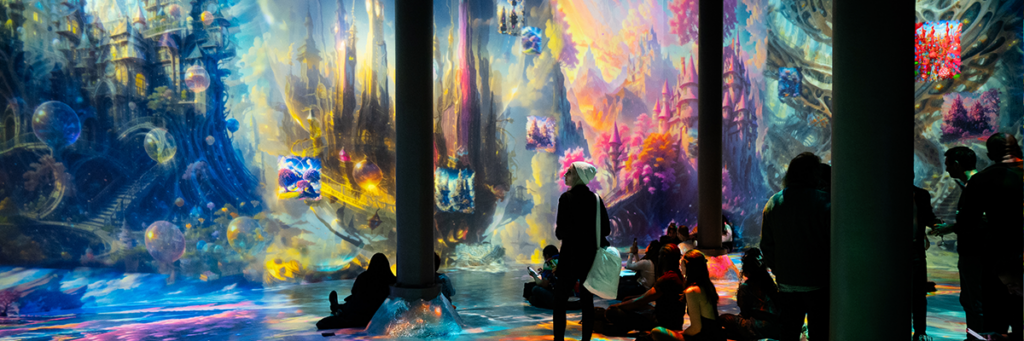
What is happening in the Immersion Gallery?
The Immersion Gallery is an audio-visual story made up of six scenes — all bringing individual universes to life. Move through the point clouds meet the ocean, navigate an ever-changing labyrinth, traverse through the dreamer’s emporium, and more. The experience underscores the idea that no matter our age or background, a part of us remains in perpetual wonder, always yearning to explore new possibilities. It is a poetic homage to the ageless power of imagination.
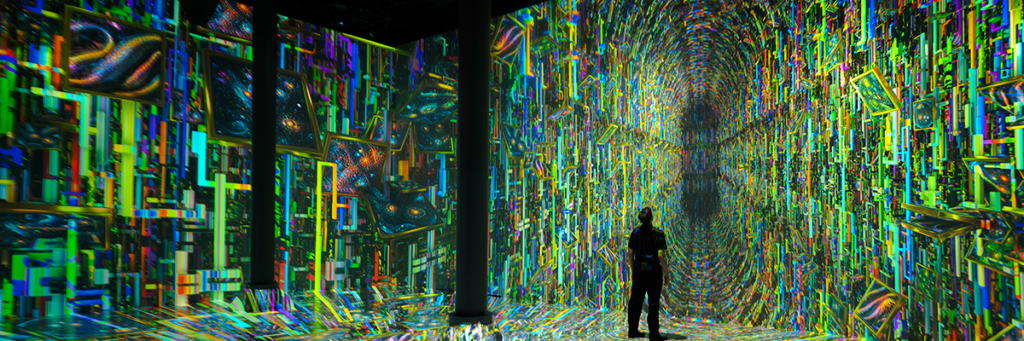
What is AI?
Artificial Intelligence is actually the broad study of how to create machines that can perform tasks like humans. AI technology can process large amounts of data in ways, unlike humans. Ultimately, AI reads and interprets pattern recognition that grows increasingly more complex. In the landscape of today’s creative industry, AI and machine learning are rapidly transitioning from mere buzzwords to integral components of the creative process. When we talk about AI, often we think of the following terminology: GANs (Generative Adversarial Networks), LLMs (Large Language Models), ChatGPT, and more!
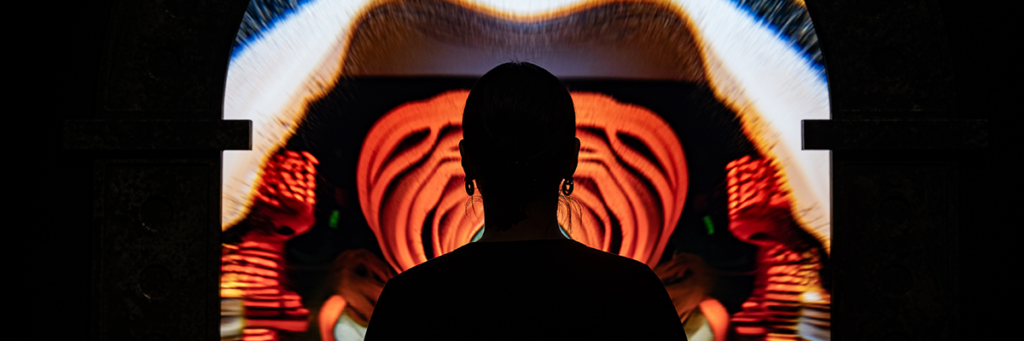
How does AI impact our everyday lives?
From Siri, Google translate, self-driving features on cars to the voice assistants on our smartphones and facial recognition, we’re using AI everyday, often without even realizing it.
Artificial Imagination expands upon the idea of conventi AI, illustrating that A.I. opens up the next generation of human creativity leading us to boundless creativity and possibilities. In World of AI·magination human creativity blend with computational dreamscape that AI generates, inviting the audience into an expansive universe encapsulated within every pixel, stirring curiosity and fueling imagination. Our ARTECHOUSE Studiolooked at AI and asked, how can we use AI to positively impact our creative processes?
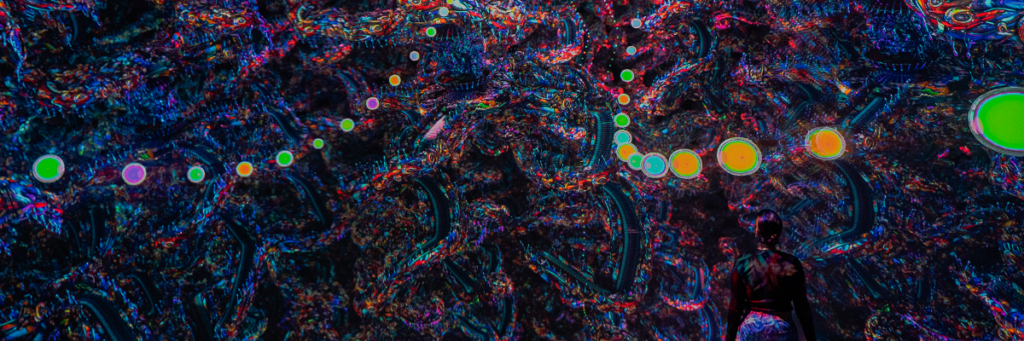
What is “Generative AI”
In simple terms, it’s a combination of two words: Artificial Intelligence, which means computers doing work that otherwise would be done by humans, and Generative, meaning producing new data by learning patterns and structure of the inputs a model is trained in. Generative AI is not a new or foreign concept. Google Translate is a generative A.I. and first debuted in 2006!
The model most people are using at the moment is called the Large Language Model (LLM), which is behind platforms such as ChatGPT.
Exploring Key Terms:
- Machine Learning (ML): Machine learning (ML) is a subfield of AI that uses algorithms trained on data to produce adaptable models that can perform a variety of complex tasks. Machine learning aims to teach a machine how to perform a specific task and provide accurate results by identifying patterns.
- GAN: Generative Adversarial Network; A framework for approaching generative AI
- StyleGAN: Generative Adversarial Network built on NVIDIA
- Stable Diffusion: Deep Learning Text to Image Generation
- AI: Artificial Intelligence is the field of study focused on making machines that can think like humans and can do things that are considered “smart.” AI technology can process through large amounts of data in order to replicate decision-making.
- LLM: Large Language Models are deep learning algorithms that can perform a variety of natural language processing (NLP) tasks. Examples include chat bots and language-based systems like Siri or Alexa
- DL: Deep learning is a method in artificial intelligence (AI) that teaches computers to process data in a way that is inspired by the human brain

Saturday March 27, 8am – 11am
Meet at the 5th Street Beach Entrance
Miami Beach, FL 33139
After the cleanup, all volunteers are invited to experience Aqueous.
The Inspiration
Our oceans play a critical role in our daily lives. They have the power to heal and connect us––and are a constant reminder that we are all part of and, as a result, responsible for this one beautiful, blue planet.
This sentiment is the inspiration behind ARTECHOUSE Miami’s Aqueous installation, selected specifically for our South Beach location in highlighting its place as a coastal city poised to be disproportionately affected by climate change in the coming years.
In Aqueous, the topic of climate change is approached in an abstract and artistic way.
With an emphasis on the fine details of nature, the ARTECHOUSE creative team draws attention to environmental changes in relation to our oceans.
The technology-driven installation highlights the beauty of water in nature: the movement of cascading rapids, the texture of waves, and more. An LED light installation on view on the first level of our art space draws inspiration from bioluminescence, a phenomenon that while aesthetically pleasing, is nature’s defensive reaction to disrupt in the ecosystem. This warning signal can be due to rising temperatures, pollution, and human activity.

Upstairs, artist Haiiileen’s piece “Agua Haiii” is on display. In this experience, the pulsed call of the whale can be heard: despite its soothing qualities, the sound is a reminder that the species is disappearing from our oceans.
Garbage collected from Miami’s beaches and Biscayne Bay, such as masks and various PPE, span the walls and are transformed as a defining textural medium. What results is more than just a captivating art piece––it is a call to action.
Haiiileen’s personal beach cleanup for this piece is what inspired us to do more, starting with our own community-driven cleanup. It is Haiiileen and ARTECHOUSE’s hope that visitors will feel an artistic connection to water and its beauty when they visit Aqueous, and take with them the awareness and care that this issue deserves.
The Impact
In partnership with Surfrider, this community cleanup is just one way we hope to empower action around ocean conservation.
10% of proceeds from ticket sales April 1 – 14 will be donated to Surfrider Miami to help in their mission to protect our oceans, waves and beaches.

Founded in 1984 by a handful of visionary surfers in Malibu, California, the Surfrider Foundation is a non-profit grassroots organization that now maintains over 500,000 supporters, activists and members, with more than 80 volunteer-led chapters and 70 clubs in the U.S.
The Miami Chapter was chartered in 1997, by a group of local water and wave enthusiasts to ensure our beaches and waterways, as well as our beloved ocean, would remain clean for the Miami community to enjoy.
Their volunteer-run Blue Water Task Force (BWTF) tests the waters of 19 locations in Miami-Dade on a weekly basis for bacteria, raising public awareness and finding real solutions to ocean pollution; solutions that restore healthy watersheds, protect local water supplies and keep pollution from reaching the ocean.
]]>In honor of Women’s History Month and beyond, join us in exploring the unique stories of women innovators whose past legacies and current ventures have shaped contemporary culture as we know it. Without women, there would be no innovation!
Loïe Fuller: The Illuminating Dancer
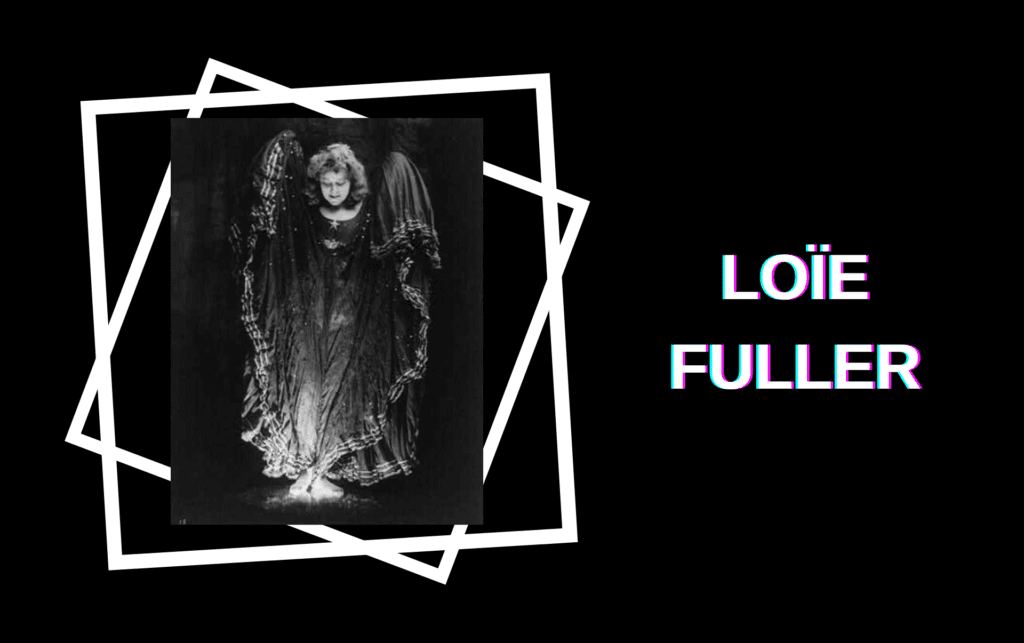
Loïe Fuller wasn’t just a dancer, she was an innovator. Pioneer of theatrical lighting techniques, Fuller stitched invention into the fabric of her modern choreography and costuming during the late 19th century.
Literally—from salts to color gel, Fuller invented a variety of chemical compounds to light up her dramatic dresses!
These experiments with light and fabric would go on to earn her various patents, special honors in The Louvre, and even membership to the French Astronomical Society.
In pushing the boundaries of traditional art forms, Fuller left behind a legacy of inspirational, unfettered creative expression—powered by innovative technology.
Edith Clarke: The First Electrical Engineer
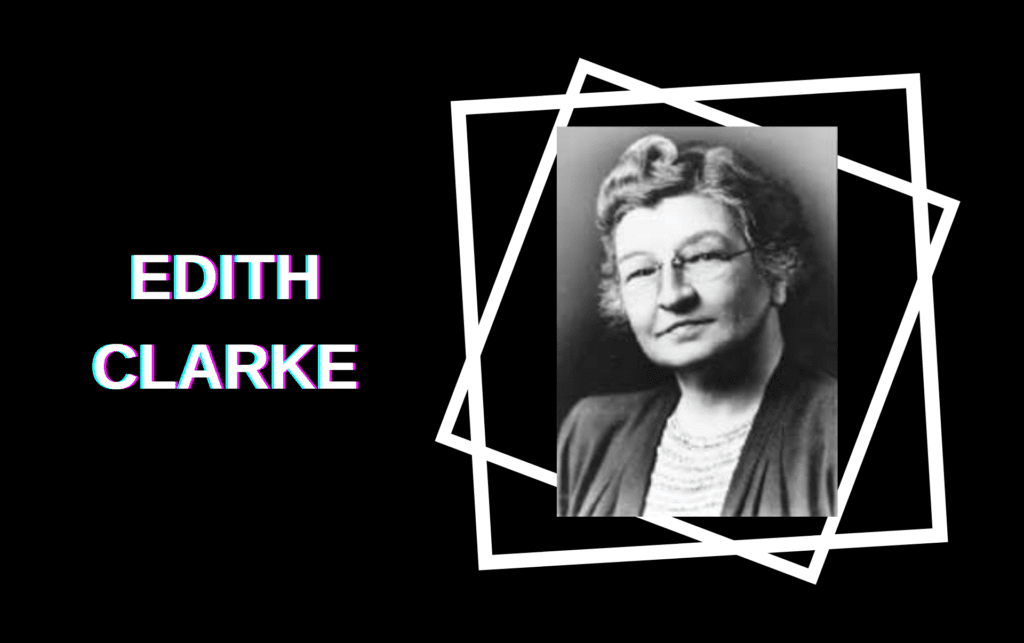
Powered by passion for all things STEM, Edith Clarke revolutionized an industry where the opportunities for women were extremely limited––even after becoming the first woman to earn a Master’s degree in electrical engineering at MIT in 1919.
Upon her monumental graduation, Clarke accepted a position at General Electric despite being overqualified. Yet in her spare time, she would invent.
Clarke received the patent for the graphical calculator in 1925, a device that solved electric power transmission problems.
“There is no demand for women engineers, as such, as there are for women doctors; but there’s always a demand for anyone who can do a good piece of work”
Edith Clarke, First woman electrical engineer
Yet her series of firsts does not end there. Clarke was the first woman electrical engineer to hold a professional position in the United States, as well as the first woman professor of electrical engineering.
Celebrating Clarke’s legacy is a reminder to us all that despite the odds, challenges, and glass ceilings, innovation is possible.
Hedy Lamarr: The Actress Turned Inventor
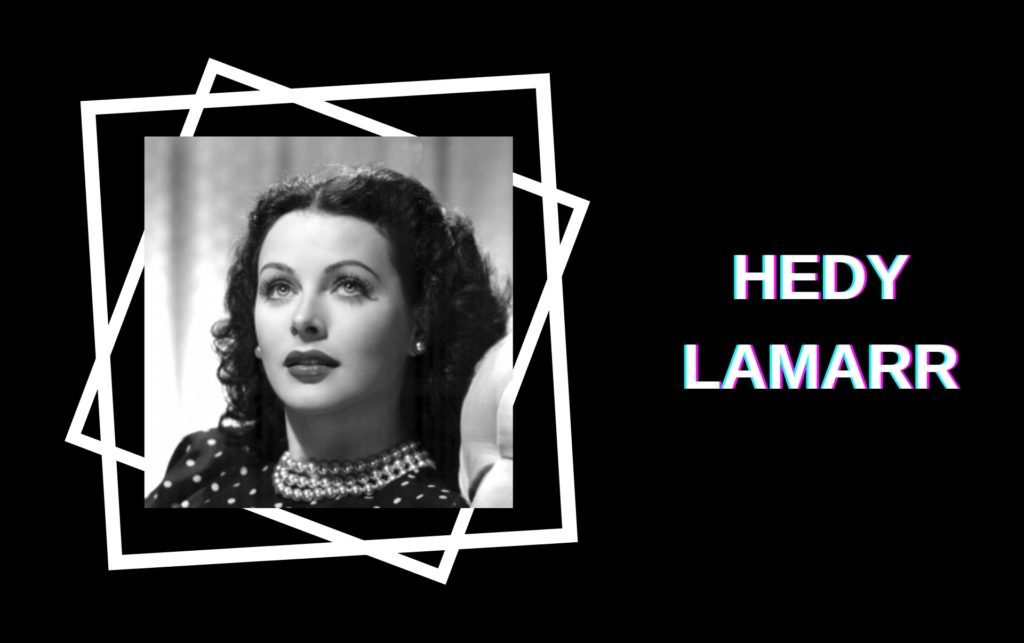
There was much more to actress Hedy Lamarr than her silver-screen beauty and performances––she was a self-taught, revolutionary inventor.
During WWII, Lamarr in collaboration with her partner George Antheil discovered a critical breakthrough in wartime radio communications: frequency hopping.
Simply put, frequency hopping made it impossible for enemy forces to locate and potentially block messages sent between Allied forces.
Though the technology was rejected by the U.S. Navy at the time, Lamarr’s design and concept would go on to inform even bigger technological innovations that currently impact our world today, such as Wi-Fi, Bluetooth, GPS, and cordless phones.
Ultimately, Lamarr’s legacy illustrates how creativity and innovation are not limited to our backgrounds and career paths, rather they are informed by our passions.
Kimberly Bryant: The People’s Champion
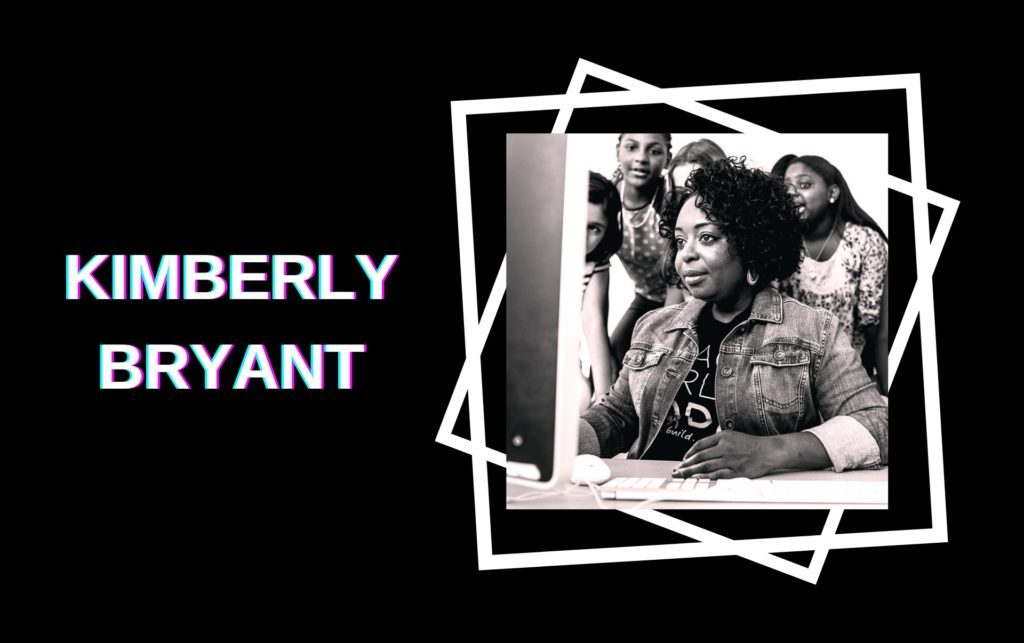
Kimberly Bryant is a current innovator and electrical engineer empowering the future for all women everywhere in the world of STEM.
In 2011, Bryant founded Black Girls Code, a nonprofit organization dedicated to supporting young women of color interested in computer programming.
Black Girls Code offers technical training and learning resources in the form of after school and summer programs, reaching over 3,000 young women in its first two years. Through access, exposure, and empowerment, Black Girls Code is currently shaping the innovators of tomorrow.
“Women and girls are naturally agents of change. If we teach one girl to code, she will go on to teach more.”
Kimberly Bryant, Electrical engineer + Founder of Black Girls Code
Bryant has gone on to receive a variety of accolades for her advocacy work.
Topping both the Root 100 and Ebony Power 100 lists, regarded as one of the 25 Most Influential African-Americans In Technology by Business Insider, invited to the White House as a “Champion of Change” under the Obama administration, and more, Bryant is an inspirational role model to all––in the world of STEM and beyond.
Keep up to date with Black Girls Code by following the organization on Instagram: @blackgirlscode.
Lisa Park: The Data-Driven Artist

Lisa Park is the very image of the intersection of art, technology, and innovation.
In exploring her fascination with human relationships and connections, the Korean-American multidisciplinary artist incorporates biofeedback devices, such as heart rate and brainwave sensors, to visually and sonically represent our invisible biological signals and emotions.
In 2013, Park gained a Master’s degree from the Interactive Telecommunications Program at New York University’s Tisch School of the Arts.
Five years later, Park would showcase one of her most innovative interactive art experiences featuring sensor technology, Blooming, at our DC art space in 2018 as a part of our cherry blossom installation “In Peak Bloom”.
Park continues to exhibit her genre-bending artwork to various communities, spreading her unique interdisciplinary vision of contemporary creativity to audiences across the globe. Stay involved with Lisa’s current projects by following her on Instagram: @thelisapark.
Nonny de la Peña: The VR Storyteller
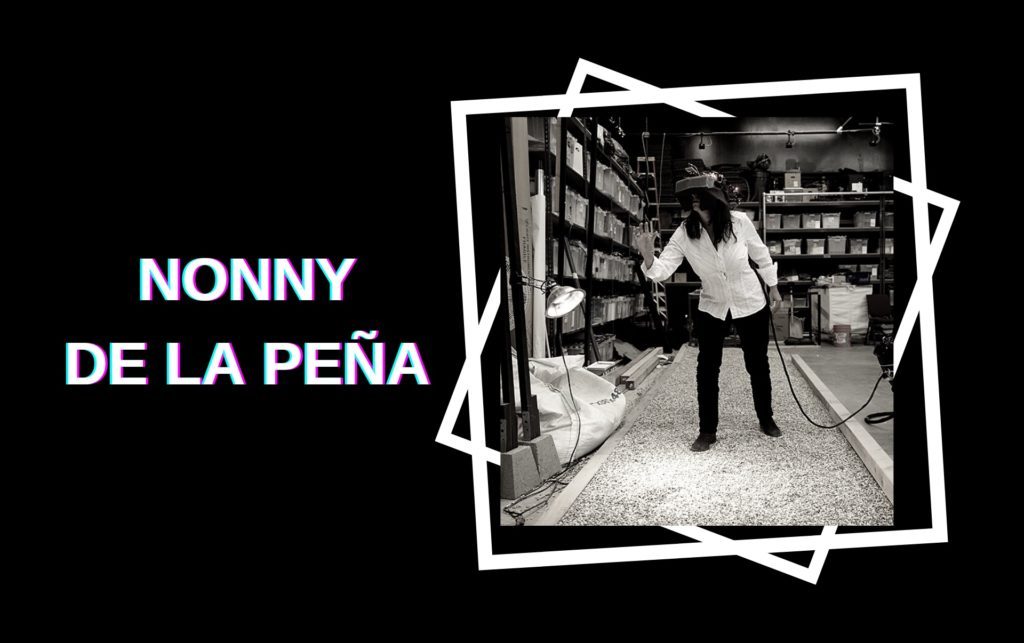
Known as the “Godmother of Virtual Reality”, immersive journalist Nonny de la Peña, PhD is currently making history through innovation.
Showcasing the first ever VR experience at Sundance Institute’s Film Festival in 2012, de la Peña revolutionizes how issue-based news is shared with global audiences.
One of her most notable projects includes Project Syria, a virtual reality experience where viewers are transported to Aleppo during a blast where they not only witness catastrophe, but feel it, hear it, and almost touch it––digitizing empathy and awareness for the better.
“Virtual reality is definitely still a guy’s world. I’m doing my best to bring women in and encourage women.”
Nonny de la Peña, Godmother of Virtual Reality + CEO of Emblematic Group
Currently, you can find de la Peña at the head of Emblematic Group as CEO, where her leadership continues to foster award-winning breakthroughs in virtual reality and beyond. Stay up to date with what’s coming next from de la Peña by following her on Twitter: @ImmersiveJourno.
]]>From cinematography, to the stage, and even to space, explore the unique stories and cultural impact of these pioneers below!
Valerie Thomas: Illusion Transmitter
In 1964, NASA would hire a young Black woman who would soon redefine satellite imagery as we all know it. Valerie Thomas is an American scientist who has had a passion for all things STEM related ever since she was in primary school.
Though never encouraged to pursue science as a young girl, Thomas graduated Morgan State University with a Physics degree—one of only two women in the major.
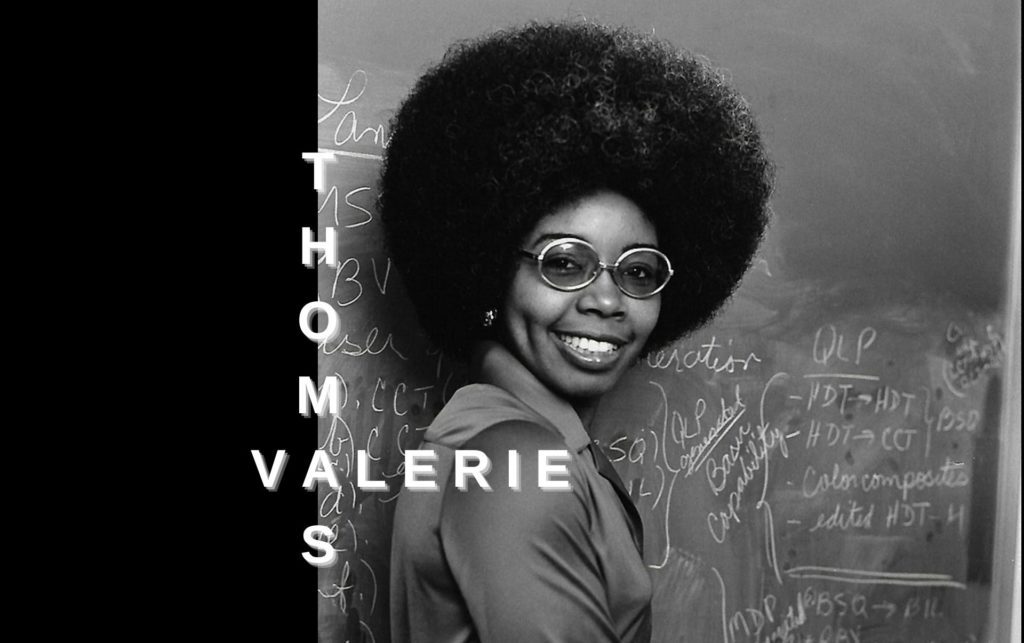
Fueled by inspiration and innovation, Thomas quickly moved from data analyst to inventor at NASA, overseeing the development of the first satellite program Landsat to ever send digital images from space.
Thomas would go on to start experimenting: exploring the relationship between objects and their spatial relationship with concave (inwards-facing) mirrors—and the possibilities that could result.
“The best preparation for the rest of your life is, maybe, no preparation at all. Dive right in. Make mistakes. Break a few rules.”
Valerie Thomas, NASA Engineer + Inventor of the Illusion Transmitter
A year later in 1977, Thomas’s biggest accomplishment would occur: the creation of the illusion transmitter. By use of various rays of light, concave mirrors, and endless experimentation, Thomas was able to produce the illusion of a three dimensional image.
Thomas secured the patent for her invention in 1980, and NASA would go on to utilize her invention ever since. From three dimensional movies to immersive digital art, Thomas’ invention plays a critical role in informing our modern visual effects practices and inventions today.
Kenneth Dunkley: 3-DVG
If you saw the critically acclaimed film Avatar in theaters back in 2009, James Cameron isn’t the only one you need to thank—without Kenneth Dunkley’s invention, the mind blowing 3D experience wouldn’t have been possible.
Leader in both holographic and visual effects breakthroughs, Dunkley is an innovator we can attribute a variety of inventions to, such as three dimensional viewing glasses.
Focusing his studies not in film, graphics, or light—but rather in human vision—Dunkley came to a revolutionary conclusion: by blocking two points in one’s peripheral (on the edges) vision, regular two dimensional images appear three dimensional.

Unlike inventions in the past, Dunkley’s three dimensional effects did not rely on any layered lenses, mirrors, or optical edits to the two dimensional image itself, but rather to our own eyesight.
Dunkley would receive the patent for his three dimensional viewing glasses in 1986.
The research Dunkley collected throughout his journey would go on to inform even more inventions, especially in the field of holography. As one colleague notes, Dunkley’s hologram is: “one of the pivotal holograms in the development of holography as an art medium.”
Simply, Dunkley’s revolutionary inventions did more than just inform contemporary technology––they augmented the very immersive, artistic experiences that even we at ARTECHOUSE incorporate and utilize.
John Henry Thompson: Lingo Scripting Language
At the intersection of art, science, and technology, you’ll find British innovator John Henry Thompson. Having attended both MIT and New York’s Art Students League, Thompson’s passion for both art and tech completely reinvented the world of programming as we know it with his scripting language, Lingo.

Predecessor to JavaScript and Adobe Flash, Lingo is the first ever cross-platform scripting language for Macromedia Director, also known as Adobe Director: the most popular programming editor for developers in the 1990s.
Check out what the world of computer graphics looked like in 1996 with this Macromedia Director promotional video.
Why was it so popular? Because it was powered by Lingo. With Lingo, developers like Thompson himself were able to create and export applications, like desktop software, onto CD-ROMs, fit for both Mac and Windows, in just a fraction of the time that it would’ve taken in C++ (the then-widely used programming language of the 1980s).
In addition to its revolutionary speed, Lingo also allowed for developers to express themselves creatively like never before. Developers were able to customize interactive user interfaces (the interaction between a human and a computer), manipulate 3D graphics and animations, and more.
“I want to make it easy for people to use the computer as an expressive instrument, and to inspire people to learn about themselves and the world.”
John Henry Thompson, Developer + Inventor of Lingo
That’s why Macromedia Director was the editor of choice for all things video games in the 1990s! Anyone who played the Total Distortion or The Journeyman Project in the family computer room have Thompson to thank.
With Lingo, Thompson made the possibilities for computer graphics limitless. Most importantly however, he reinvented our relationship with the computer itself. No longer was the computer just a machine—it was, and still is, an expressive, artistic tool.
Shirley Prendergast, Broadway Lighting Designer
Before she was a lighting designer, she was a scientist who danced.
As a young adult, Shirley Prendergrast balanced her interest in science with her passion for dance. From performing with a small company while gaining her microbiology degree from Brooklyn College, to working during the day as a bacteriologist with the NYC Health Department and spending her evenings dancing, Prendergrast’s passion for both art and tech was undeniable.
From dance, Prendergast became interested in photography. What started as a single lighting class at the local YMCA to improve her skill turned into her admittance to the Lester Polokov’s Studio of Stage Design as a lighting design student.

And soon thereafter, Prendergast would start blazing trails. She became the first Black woman to be admitted to the United Scenic Artists’ lighting division in 1969, as well as the first Black female lighting designer on Broadway, with the 1973 production The River Niger.
In addition to more notable projects on Broadway, Prendergast would design for theatrical companies such as Alvin Ailey, the Negro Ensemble Company, New York Shakespeare Festival, and more over the course of her 50 year career.
With a trademark style known for its powerful subtlety, Prendergast would go onto receive numerous industry awards, including the 1997 Obie Award for Sustained Excellence in Lighting Design, the 2009 National Black Theatre Festival Award for Outstanding Achievement in Lighting Design, and more.
Paving the way for future generations both on and off the stage, Prendergrast’s achievements continue to shape, inspire, and empower those in the theatre industry today.
Marc Hannah, 3-D Special Effects Systems
Engineer. Founder. Creator. Changemaker. These are some of the few titles associated with Marc Hannah, innovator of some of the most cutting-edge technologies in the world of 3D visual graphics.
From gaming consoles like the Nintendo 64 to box office hits like Jurassic Park, Hannah’s work spans the technological world far and wide.

Founder of Silicon Graphics Incorporated (SGI) in 1986, Hannah’s ultimate goal was to revolutionize computer graphics in a way that made them faster, smaller, less expensive, and as a result, accessible. That is, high-tech innovation became something everyone could experience—not just programmers and engineers.
Hannah’s technology came alive in the theaters. From 1995 to 2002, every film nominated for an Oscar for Visual Effects were created on SGI computer systems.
Take Titanic, for example: a computer-generated ocean, thousands of computer-generated extras that matched the movement of real life actors on the ship, and more—all made possible by over 300 SGI workstations.
“I see areas where the technology can make a huge difference. And so I hope to be a part of making that difference.”
Marc Hannah, Founder of Silicon Graphics Incorporated (SGI)
His technology also reached our own television sets at home. From Michael Jackson’s music video “Black or White” to the Monday Night Football opening video, Hannah’s computers not only powered, but framed some of the most popular American viewing experiences of the 1990s.
But Hannah does not limit his innovations to just the computer and the consumer. Co-founding construction company Rondeau Bay, Hannah uses his tech for good in fixing and updating sewage lines for communities in Oakland, California.
Hannah’s inventions have made such a palpable impact on society because, to Hannah, society comes first. His projects were for the people—he realized what individuals were looking for and in need of, and dedicated his life’s work to inclusion, accessibility, and always being ahead of the curve.
Knowing the Past, Empowering the Future
Black excellence is at the heart of innovation. It is the very fuel that pushed the worlds of art and technology forward and inspired modern invention.
And it continues to do so. That’s why Black history cannot be reduced to a single moment in time to celebrate the work of impressive individuals—it’s a lifelong commitment to empowering Black art, technology, voices, narratives, and more.
]]>